The Ultimate Guide to Debt Snowball vs Debt Avalanche Method
Understand the differences between the debt snowball and debt avalanche methods to choose the best debt repayment strategy for you.
Understand the differences between the debt snowball and debt avalanche methods to choose the best debt repayment strategy for you.
The Ultimate Guide to Debt Snowball vs Debt Avalanche Method
Understanding Debt Repayment Strategies Your Path to Financial Freedom
Hey there! If you're reading this, chances are you're looking for a way to tackle your debt head-on. Good for you! Taking control of your finances is one of the most empowering things you can do. When it comes to debt repayment, two popular strategies often come up: the debt snowball method and the debt avalanche method. Both are fantastic tools, but they work in slightly different ways and appeal to different personalities. Let's dive deep into each, compare them, and help you figure out which one is your best bet for crushing that debt.What is the Debt Snowball Method How it Works and Who it's For
Imagine rolling a small snowball down a hill. As it rolls, it picks up more snow and gets bigger and faster. That's essentially how the debt snowball method works! This strategy focuses on psychological wins to keep you motivated.The Mechanics of the Debt Snowball
Here's how you put the debt snowball into action:- List all your debts: Gather all your debt information – credit cards, personal loans, student loans, car loans, medical bills, etc.
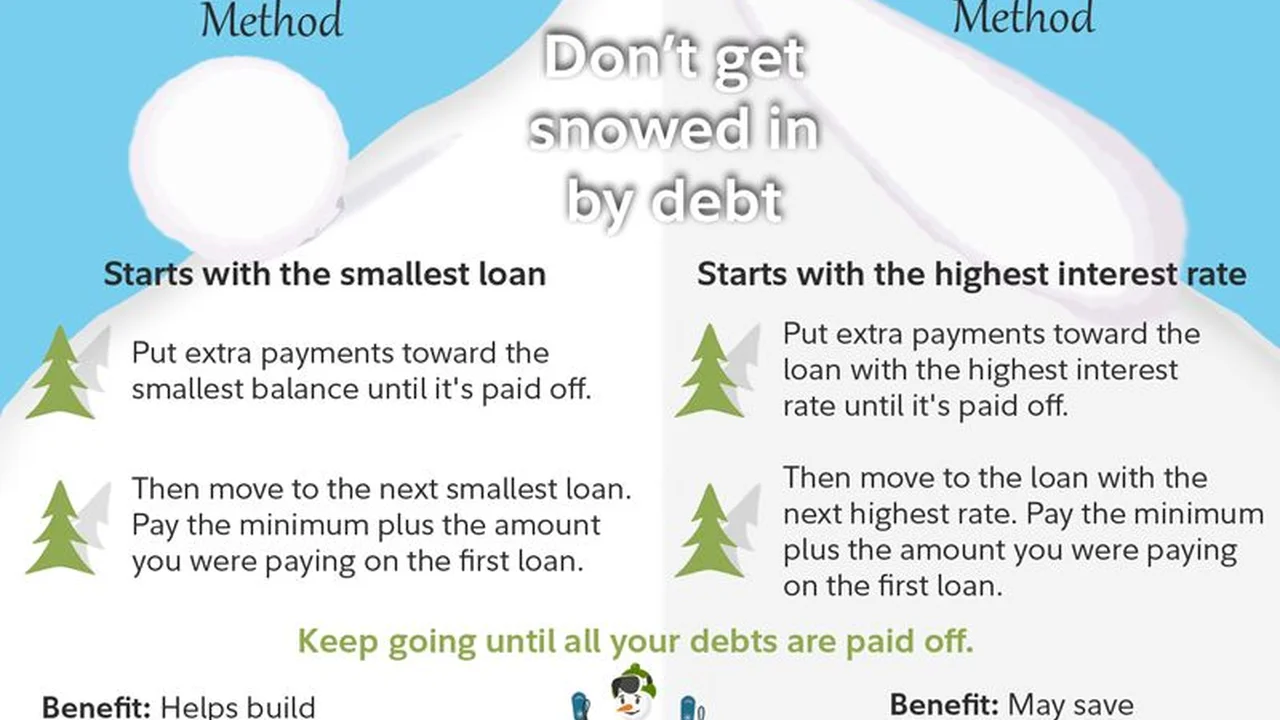
- Order them by smallest balance: This is the crucial step. Ignore interest rates for a moment and arrange your debts from the smallest total balance to the largest.
- Make minimum payments on all but the smallest: For all debts except the one with the smallest balance, you'll pay only the minimum required payment.
- Attack the smallest debt: Throw every extra penny you can find at the debt with the smallest balance. Pay as much as you possibly can on this one.
- Roll the payment: Once that smallest debt is paid off (woohoo!), take the money you were paying on it (the minimum payment plus any extra you were contributing) and add it to the minimum payment of the *next* smallest debt.
- Repeat: Continue this process. As each debt is paid off, the amount you're paying on the next debt grows, just like a snowball rolling down a hill.
Why the Debt Snowball Works Psychological Momentum
This method is a favorite of financial gurus like Dave Ramsey, and for good reason. Its primary benefit is the psychological boost you get from quickly paying off smaller debts. Those early wins create momentum and keep you motivated to continue the often-long journey of debt repayment. If you're someone who needs to see progress to stay engaged, the debt snowball could be your secret weapon.Ideal Candidates for the Debt Snowball Method
- Those who need quick wins: If you get easily discouraged or need tangible proof of progress, the snowball method provides that.
- People with many small debts: If you have several credit cards with relatively low balances, you can knock them out quickly.
- Anyone feeling overwhelmed by debt: The simplicity and early successes can make the daunting task of debt repayment feel more manageable.
What is the Debt Avalanche Method How it Works and Who it's For
If the debt snowball is about psychological wins, the debt avalanche is about mathematical efficiency. This method prioritizes saving money on interest.The Mechanics of the Debt Avalanche
Here's how to implement the debt avalanche:- List all your debts: Just like with the snowball, gather all your debt information.
- Order them by highest interest rate: This is the key difference. Arrange your debts from the highest annual percentage rate (APR) to the lowest.
- Make minimum payments on all but the highest interest debt: For all debts except the one with the highest interest rate, you'll pay only the minimum required payment.
- Attack the highest interest debt: Direct every extra dollar you have towards the debt with the highest interest rate. This is where you'll save the most money in the long run.
- Roll the payment: Once that highest interest debt is paid off, take the money you were paying on it (the minimum payment plus any extra) and add it to the minimum payment of the *next* highest interest debt.
- Repeat: Continue this process until all your debts are gone.
Why the Debt Avalanche Works Financial Efficiency
The debt avalanche method is mathematically superior because it minimizes the total amount of interest you pay over the life of your debts. By targeting the most expensive debts first, you reduce the principal on those accounts faster, which means less interest accrues. This can save you hundreds or even thousands of dollars and shorten your overall repayment timeline.Ideal Candidates for the Debt Avalanche Method
- Those who are highly disciplined: If you're motivated by numbers and financial efficiency, and don't need constant psychological boosts, this method is for you.
- People with high-interest debts: If you have significant credit card debt with APRs of 18% or more, the avalanche method will save you a lot of money.
- Anyone looking to save the most money: If your primary goal is to pay the least amount of interest possible, the avalanche is the clear winner.
Debt Snowball vs Debt Avalanche A Head-to-Head Comparison
Let's put these two strategies side-by-side to highlight their differences and help you decide.Key Differences and Similarities in Debt Repayment
| Feature | Debt Snowball | Debt Avalanche |
|---|---|---|
| Prioritization | Smallest balance first | Highest interest rate first |
| Primary Benefit | Psychological motivation, quick wins | Saves most money on interest, faster overall repayment |
| Motivation Type | Emotional, behavioral | Logical, mathematical |
| Total Interest Paid | Potentially more | Least amount |
| Time to Repay | Potentially longer | Potentially shorter |
| Best For | Those needing motivation, many small debts | Disciplined individuals, high-interest debts |
Which Method is Right for You Making the Smart Choice
The 'best' method isn't universal; it's the one you'll stick with. If you're prone to losing steam or need to see progress quickly, the snowball method's early wins can be incredibly powerful. If you're a numbers person, highly disciplined, and want to optimize your financial savings, the avalanche method is mathematically superior. Consider your personality and financial situation:- Are you easily discouraged? Go with the snowball.
- Do you have a lot of high-interest credit card debt? The avalanche will save you a ton.
- Can you stay motivated even if the first few debts take a while to pay off? Avalanche.
- Do you have many small debts that feel overwhelming? Snowball.
Tools and Products to Help You Manage Your Debt Repayment Journey
Regardless of whether you choose the snowball or avalanche, having the right tools can make your debt repayment journey smoother and more organized. Here are some excellent options, including specific products and their use cases.Budgeting Apps for Tracking and Planning Your Debt Payments
Budgeting is the foundation of any successful debt repayment plan. These apps help you see where your money is going and find extra cash to throw at your debts.1. YNAB (You Need A Budget)
- Use Case: Excellent for zero-based budgeting, which is perfect for finding every dollar to allocate to debt. It encourages you to give every dollar a job.
- Features: Connects to bank accounts, robust reporting, goal tracking, active community.
- Comparison: More hands-on than some other apps, requiring active participation, but incredibly effective for debt focus.
- Pricing: Around $14.99/month or $98.99/year (USD). They often offer a free trial.
2. Mint
- Use Case: Great for a comprehensive overview of your finances, including all debts, assets, and spending. Good for those who want a less intensive budgeting experience but still need to track.
- Features: Free, links all accounts, tracks spending, bill reminders, credit score monitoring.
- Comparison: More automated and less 'active' budgeting than YNAB, but provides a great snapshot.
- Pricing: Free (ad-supported).
3. Personal Capital (now Empower)
- Use Case: While primarily an investment tracker, its free budgeting tools are robust for tracking net worth and cash flow, which is crucial for understanding your overall financial health while paying down debt.
- Features: Free financial dashboard, investment tracking, retirement planner, budgeting tools.
- Comparison: More focused on overall wealth management, but its budgeting features are solid for debt tracking.
- Pricing: Free for the dashboard and budgeting tools. Paid services for wealth management.
Debt Management Tools and Calculators for Strategy Implementation
These tools help you visualize your debt repayment and stay on track.1. Undebt.it
- Use Case: This website is a fantastic free tool specifically designed to help you implement either the debt snowball or debt avalanche method. You input your debts, and it calculates the optimal payment plan.
- Features: Debt snowball/avalanche calculator, custom payment plans, payment reminders, detailed reports, ability to adjust extra payments.
- Comparison: Highly specialized for debt repayment strategies, offering more customization than general budgeting apps for this specific task.
- Pricing: Free, with an optional paid premium version for advanced features (e.g., syncing with financial institutions).
2. Tally
- Use Case: Tally is an app that helps manage and pay down credit card debt. It can act as a low-interest line of credit to consolidate your high-interest credit card balances, effectively implementing an avalanche strategy for your credit cards.
- Features: Consolidates credit card debt, automates payments, lower interest rates (for eligible users), credit score monitoring.
- Comparison: More of a financial product than just a calculator; it actively helps you manage and potentially lower the interest on your credit card debt.
- Pricing: Free to use the app. Interest rates apply to the line of credit, which can vary based on creditworthiness (typically lower than average credit card APRs).
3. Debt Payoff Planner (App for iOS/Android)
- Use Case: A mobile app that allows you to input your debts and visualize your payoff plan using either the snowball or avalanche method. Great for on-the-go tracking.
- Features: Debt snowball/avalanche calculators, payment tracking, progress visualization, customizable extra payments.
- Comparison: A convenient mobile alternative to web-based calculators, offering similar functionality in a pocket-friendly format.
- Pricing: Free with in-app purchases for premium features.
Debt Consolidation and Refinancing Options When to Consider Them
Sometimes, a strategy alone isn't enough, and you might need to adjust the terms of your debt. Debt consolidation and refinancing can be powerful tools, especially when combined with the avalanche method.1. Personal Loans for Debt Consolidation
- Use Case: If you have multiple high-interest debts (especially credit cards), a personal loan can consolidate them into one payment with a potentially lower interest rate. This simplifies your payments and can save you money, making the avalanche method even more effective.
- Providers: Banks (e.g., Citibank, Wells Fargo), Credit Unions, Online Lenders (e.g., SoFi, Marcus by Goldman Sachs, LightStream).
- Comparison: Online lenders often offer quicker approval and competitive rates, while traditional banks might be preferred by those who value in-person service.
- Pricing: Interest rates vary widely based on credit score, loan term, and lender (typically 6% - 36% APR). Origination fees may apply (0% - 8%).
2. Balance Transfer Credit Cards
- Use Case: Ideal for credit card debt. You transfer balances from high-interest cards to a new card with a 0% introductory APR for a set period (e.g., 12-21 months). This gives you a window to pay down debt without accruing interest.
- Providers: Major credit card issuers (e.g., Chase Slate Edge, Citi Simplicity, Discover it Balance Transfer).
- Comparison: Excellent for short-term debt elimination, but requires discipline to pay off the balance before the promotional period ends and the regular APR kicks in.
- Pricing: 0% intro APR for a period, then a variable APR (typically 15% - 25%). Balance transfer fees usually apply (3% - 5% of the transferred amount).
3. Student Loan Refinancing
- Use Case: If you have private student loans (or even federal loans if you're willing to give up federal protections), refinancing can get you a lower interest rate or a different payment term. This can significantly reduce the total cost of your student loans.
- Providers: Online lenders specializing in student loan refinancing (e.g., SoFi, Earnest, CommonBond).
- Comparison: Can save a lot of money on interest, but be aware of the trade-offs, especially with federal loans.
- Pricing: Interest rates vary based on credit score and loan term (typically 3% - 8% variable or fixed APR). No origination fees are common.
Staying Motivated and Avoiding New Debt During Repayment
Paying off debt is a marathon, not a sprint. Here are some tips to keep you going and prevent falling back into old habits.Building a Strong Financial Foundation for Long-Term Success
- Create a realistic budget: This is non-negotiable. Know exactly what's coming in and going out.
- Build an emergency fund: Even a small one (e.g., $1,000) can prevent you from using credit cards for unexpected expenses.
- Track your progress: Use a spreadsheet, an app, or even a physical chart to see how far you've come. Visualizing your progress is a huge motivator.
- Celebrate small wins: Paid off that smallest credit card? Treat yourself to something small and free, like a walk in the park or a movie night at home.
- Automate payments: Set up automatic payments for at least the minimums to avoid late fees and keep your plan on track.
- Cut up credit cards (if necessary): If you struggle with impulse spending, physically removing the temptation can be very effective.
- Find a debt-free buddy: Share your goals with a trusted friend or family member who can offer support and accountability.
- Educate yourself: Keep learning about personal finance. The more you know, the more confident you'll become.
:max_bytes(150000):strip_icc()/277019-baked-pork-chops-with-cream-of-mushroom-soup-DDMFS-beauty-4x3-BG-7505-5762b731cf30447d9cbbbbbf387beafa.jpg)